Association professionals face a challenging paradox: members demand personalized digital experiences, yet many organizations are still operating on fragmented systems that treat members like static data points.
Choosing the right technology goes beyond maintaining a clean database. It’s about finding a platform that can drive growth, personalization, and engagement. Enter member management software. This type of platform makes every touchpoint in the member journey—from initial sign-ups to renewals—seamless and professional.
If you’re not sure where to start, you’ve come to the right place! This guide addresses frequently asked questions regarding member management technology, so you can make an informed software purchase.
What must-have features should you look for in membership software?
At its most basic level, membership software serves as a centralized database to track member records and process dues. However, modern associations require much more than a digital filing cabinet. You need a system that acts as your organization’s “central nervous system” to streamline operations and fuel growth.
A comprehensive system should offer these features:
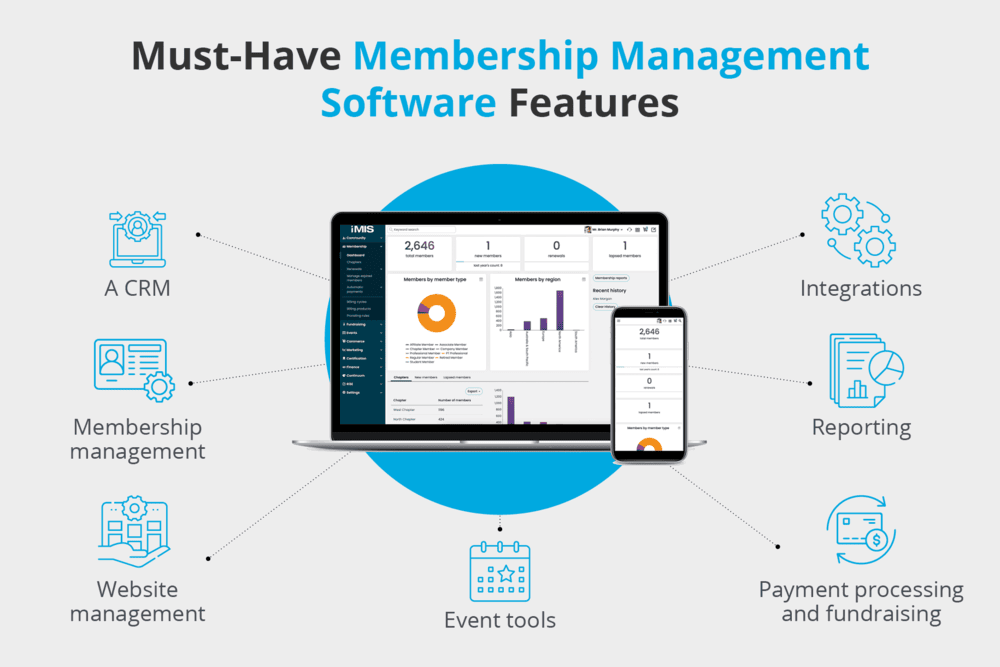
- CRM and Member Data Management: You need a Single Source of Truth (SSOT) that builds 360-degree profiles for each member, capturing every interaction from donations to event attendance in one searchable database.
- Membership Management: Beyond storing data, your system must handle complex membership models (individual vs. company) and offer automation for online registration and renewals.
- Website Management: A modern system includes a native content management system (CMS) that allows you to manage your public site and private member portal.
- Event Tools: To support all types of events from webinars to conferences, look for features that manage the entire event lifecycle, including agenda building, targeted marketing, and registration with flexible pricing options.
- Payment Processing and Fundraising: The platform should centralize all revenue streams and work seamlessly with your accounting software.
- Reporting: Your tools should provide real-time insights and dashboards that allow you to visualize engagement trends and financial health.
- Integrations: No tool does everything alone; a robust API and pre-built integrations (for platforms like learning management systems or external email tools) are critical for scalability.
Advancements in association technology have produced more comprehensive solutions that you should be aware of when navigating the market. While a traditional association management system (AMS) focuses primarily on back-office administrative tasks, an engagement management system (EMS) is designed to manage the entire member journey. In this context, the AMS functions are just one component of the whole EMS platform, which fuses database management, web publishing, and relationship management into a single solution.
Why should my association invest in membership management software?
Any association can benefit from using member management software. Transitioning to a dedicated membership platform provides the data you need to proactively strategize and leverage opportunities. If you are currently juggling disparate tools, here are the primary benefits of investing in a unified system, according to iMIS’s buyers guide to membership management software:
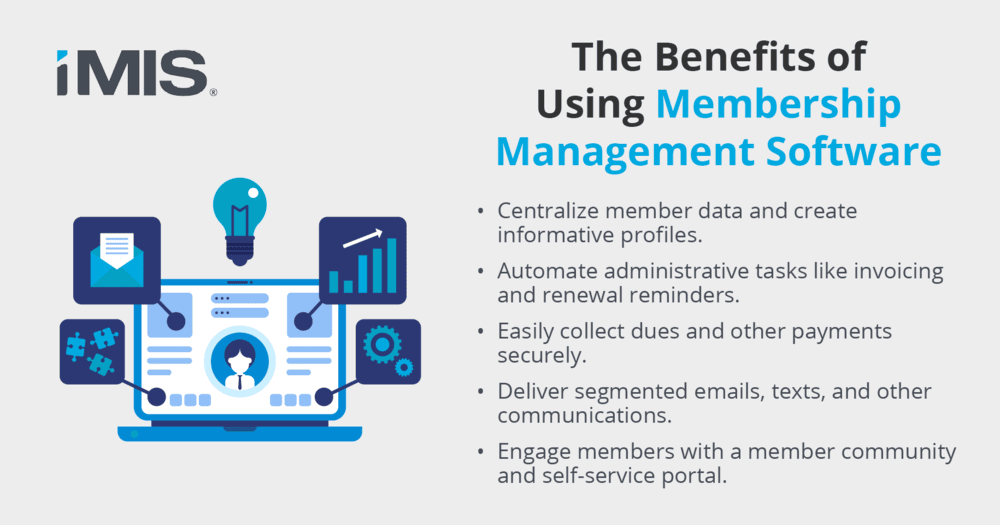
- Centralize member records. Instead of hunting through scattered spreadsheets, you’ll have a single, searchable database that houses everything from individuals’ contact information to their engagement levels.
- Boost operational efficiency. You can reduce your staff’s manual workload by automating routine administrative tasks like welcome emails, renewal notices, and invoice generation.
- Easily collect payments. Secure online payment gateways streamline the collection process for dues and other fees for your team and members.
- Send smarter outreach. Replace generic email and text blasts with personalized communication. If your system offers built-in marketing tools, you can segment members and send targeted messages with tailored engagement opportunities.
- Build a stronger member community. A modern system provides frontend value to members through self-service portals, event recommendations, and searchable directories that foster connection.
Ultimately, these benefits work together to achieve two critical goals: improving operational efficiency and enhancing member value. A unified system gives you the insights to understand your members’ needs and the administrative freedom to actually fulfill them.
How does membership software help manage website content?
A comprehensive membership platform may empower you to manage your member portal, special-purpose microsites, and your public-facing site. This allows you to engage current members with gated content while also recruiting new members with your public web presence.
A native CMS offers advanced website capabilities that disparate systems cannot match:
- True Personalization: Because your website will connect directly to your member database, you can provide members with a personalized web experience where content dynamically adjusts based on their data. For example, your system might suggest certain events, volunteer opportunities, or professional development courses based on individuals’ past engagement.
- Scalability for Chapters: You can allow chapters, affiliates, or committees to manage their own sub-websites within the main platform. This ensures brand consistency while distributing the workload as needed.
- Global Accessibility: For organizations with a diverse membership base, modern platforms include multi-language content creation and support to ensure your message reaches every member effectively.
Ideally, your system should also feature a drag-and-drop page builder to ensure non-technical staff can create and update pages without writing code, eliminating the bottleneck of waiting on IT or developers for day-to-day changes.
What’s the best way to protect member data?
Security is a top priority for any organization handling members’ personal information and payment data. Cloud-based software offers significant security advantages over on-premise servers, primarily because reputable providers use world-class infrastructure (such as Microsoft Azure) to protect data.
Cloud platforms are designed to be scalable and secure, often providing automatic updates that ensure you are always protected against the latest threats without needing manual intervention. Additionally, relying on a unified cloud platform helps eliminate the security risks associated with managing multiple login credentials and data transfer points across different vendors.
As your first line of defense, 360MatchPro’s data management guide emphasizes that tools that encrypt data are crucial for safeguarding private information. Beyond investing in secure membership tools, you’ll want to conduct regular security audits, implement strong password policies, and limit access within your software to authorized personnel only.
How does membership software fuel continuous performance improvement?
“Continuous performance improvement” is a strategy where an organization consistently refines its operations to achieve better results over time. The right software drives these efforts by closing the gap between execution and analysis.
Instead of waiting for end-of-year reports to see what worked, a unified system provides real-time dashboards that visualize key performance indicators (KPIs) immediately. This turns every campaign or event into a learning opportunity.
For instance, if you spot a declining trend in event registrations, you can drill down into the data to identify the cause and pivot your marketing strategy—shifting your team from reactive problem-solving to proactive optimization. Or, by analyzing resource downloads, you might discover a sudden spike in interest for a specific topic. This insight allows you to quickly develop a new webinar or certification course to meet that need.
Wrapping Up
The right member management software acts as a partner in your growth, freeing your staff from administrative burdens so they can focus on what truly matters: building deeper relationships with your members.
As you evaluate your options, look beyond feature lists and focus on the architecture of the solution. Prioritize platforms that serve as an SSOT and offer native capabilities, ensuring that your organization is agile enough to adapt to whatever the future of member engagement holds.
With this foundational knowledge in mind, you’re prepared to make the right decision for your association’s technology stack.