Along with filling gaps in service delivery, volunteer programs signal that your community is deeply invested in your nonprofit’s mission. When you capture and share that volunteer impact, it can become one of the strongest assets in your next grant proposal.
Grant applications filled with volunteer impact data and stories reassure funders that their dollars will be leveraged—not duplicated—by existing local commitment. To get there, thoughtful reporting in every stage of the volunteer lifecycle, from recruitment to retention, sets you up for long-term grant success.
In this post, you’ll learn how to convert volunteer data into meaningful metrics and compelling narratives, so you can make a stronger case for funding.
Use Volunteer Data to Meet Grant Requirements
For many public and private grants, especially federal awards, compliance begins with meeting cost-sharing or matching requirements. Grantmakers often expect recipients to cover a portion of project costs with non-federal resources, including in-kind contributions such as donated goods, services, and volunteer labor.
When you track volunteer hours accurately and assign them a fair market value, those hours can be applied toward the required match and clearly documented in your budget narrative. To do this well, you need more than a simple sign-in sheet. You should record:
- Each volunteer’s role
- The nature of the work performed
- Dates and times served
- The wage rate used to calculate value (for example, a professional skill-based volunteer versus a general support role)
This level of detail helps you align your documentation with grantmaker rules and prepares you for monitoring or audits, where reviewers will want to see that your in-kind match is necessary, reasonable, and properly supported. When in doubt, coordinate with finance and compliance staff to ensure your volunteer reporting system mirrors the same rigor you apply to cash expenditures.
Quantify Organizational Capacity and Scalability
Funders want confidence that your organization is capable of effective grant management without losing control of quality, compliance, or reporting. Volunteer data is one of the clearest ways to show that you have the human infrastructure to scale services without a proportional increase in payroll or overhead.
For example, if you can demonstrate that a relatively small staff leverages thousands of volunteer hours annually, you are signaling efficient use of resources and strong operational capacity. Pull specific metrics directly from your volunteer reporting system, such as:
- Total volunteer hours during the last fiscal year
- Average hours served per volunteer
- Volunteer retention rate
- Volunteer-to-staff ratio
- Estimated outcome-to-hour ratio (i.e., “One hour of volunteer service results in three meals prepared,” or “20 hours of skilled volunteer IT support kept our client database secure and functional for a month.”
These numbers help reviewers see how added funding will translate into expanded outputs, not bloated administrative costs.
Weave Qualitative Impact Stories into the Narrative
Numbers alone rarely win a grant; they need to be paired with real people and real outcomes. According to UpMetrics, qualitative details, like experiences and testimonials, can bring your data to life.
Volunteer testimonials demonstrate the lived experience behind your program metrics. Here are some tips for collecting and using qualitative data:
- Consider the volunteer-to-donor pipeline as one powerful storyline. Highlight individuals who started by giving time, then chose to contribute financially after seeing the impact up close. Volunteer grants contributed by supporters’ employers can also demonstrate multi-channel commitment, which funders see as a strong indicator of community buy-in.
- Use observational data from volunteers who interact directly with beneficiaries. They may notice small but meaningful changes that staff dashboards don’t always capture. For example, a volunteer may notice a client regularly attending classes, or a family taking advantage of new services.
- Be intentional about diversity and representation. Ensure that your volunteer stories reflect the range of ages, backgrounds, and neighborhoods involved in your work. A diverse representation not only speaks to the broad reach and inclusivity of your organization but also strengthens the narrative by showing how different perspectives and skills contribute to the overall mission.
Collect short quotes and reflective statements from volunteers after events or program cycles, and then weave them into sections of your narrative that discuss outcomes or community needs. When paired with journey-mapping and engagement tracking from your volunteer management and reporting tools, these stories help reviewers connect the dots between activity, engagement, and long-term support.
Highlight Long-Term Sustainability
Every strong proposal answers an unspoken question: “What happens when the grant ends?”
A robust, engaged volunteer team is one of the clearest indicators that your programs will continue beyond the current funding cycle. When you show that volunteers consistently invest time, skills, and even their own money, you’re demonstrating broad community buy-in and a support base that outlasts any single grant award.
Use your data to document how volunteer engagement has grown over time and how it contributes to financial sustainability. For instance, if a percentage of volunteers eventually become individual donors or peer-to-peer fundraisers, share those conversion rates and any related revenue trends.
Place these details strategically within the sections of your proposal that address sustainability and organizational background. According to Thompson Grants’ sample grant proposal templates, the following order is standard for a strong grant proposal, but you should always follow a structure that aligns with funder expectations:
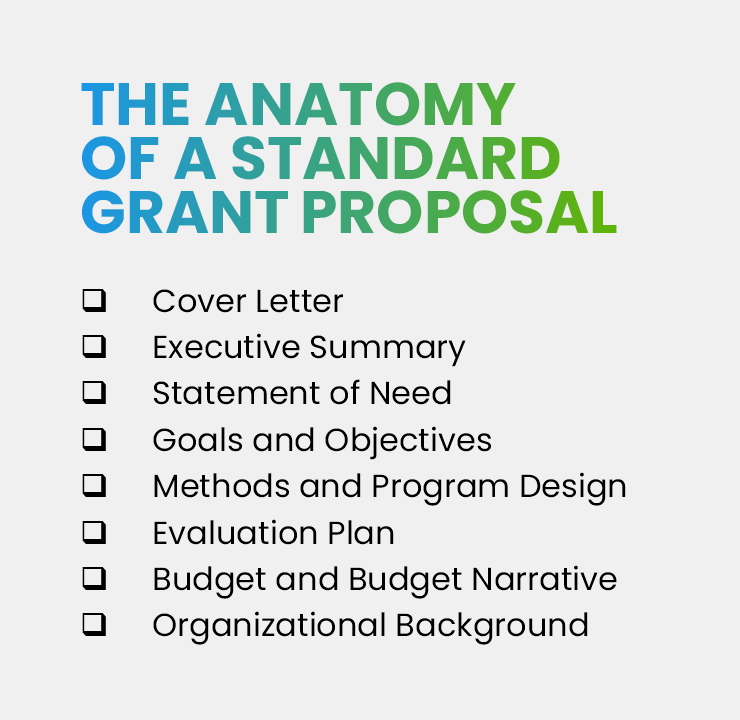
- Cover letter
- Executive summary
- Statement of need
- Goals and objectives
- Methods and program design
- Evaluation plan
- Budget and budget narrative
- Organizational background
By incorporating volunteer impact data into these sections of your grant proposal, your volunteer program is framed not just as “extra help,” but as an engine for long-term funding and program resilience.
A competitive grant application presents a holistic picture of your organization’s health, weaving financials, programming, and community engagement into one cohesive story. However, don’t let these efforts steer you toward common application mistakes, such as allowing volunteer contributions to overshadow your nonprofit’s needs.
Treat your volunteer coordinator as a key partner in this process. They often hold the most accurate data and the richest stories about how volunteers drive impact. Make time to verify counts, refine anecdotes, and confirm that every statistic used for cost share or outcomes is documented in your volunteer reporting system.
Finally, remember that when you demonstrate that your community is already giving generously of its time, you create a powerful rationale for grantors to invest their dollars as well.